The future of defence communications
How mmWave RF and beamforming are transforming the battlefield.
By Dr. Vickram Vathulya, CEO, Sivers Semiconductors
As we navigate an increasingly digital world, the convergence of commercial telecommunications and defense technologies has never been more apparent. At Sivers Semiconductors, we’re witnessing firsthand how millimeter-wave (mmWave) RF and beamforming technologies are revolutionizing both sectors, creating unprecedented opportunities for innovation and cross-industry collaboration.
The digital battlefield demands new solutions
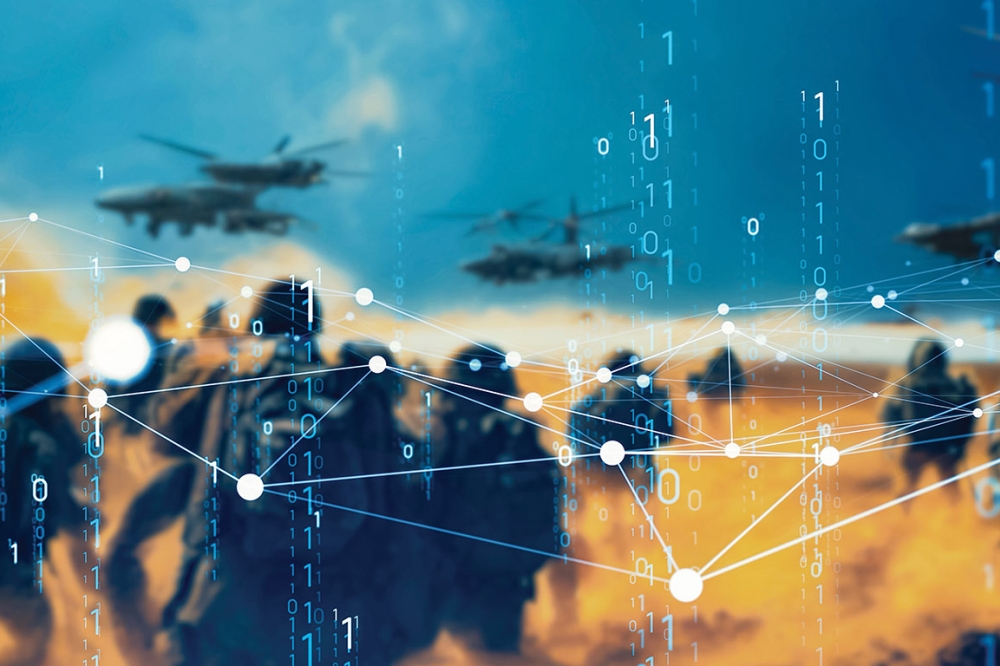
The modern battlefield has evolved into a complex digital ecosystem where success depends on superior data capabilities. In recent conversations with defense partners, one theme consistently emerges: traditional RF systems simply cannot meet the bandwidth, security, and adaptability requirements of next-generation defense platforms.
Legacy RF technologies operating in lower frequency bands face critical limitations that make them increasingly unsuitable for advanced defense applications. Spectrum congestion has reached levels that significantly reduce operational effectiveness. The limited bandwidth cannot support the massive data requirements of AI-driven systems and real-time sensor fusion. Perhaps most concerning, these traditional systems’ vulnerability to interception and jamming creates unacceptable security risks in contested environments.
These challenges aren’t unique to defense - experts are seeing similar constraints in commercial telecommunications, creating a natural technological convergence that’s driving innovation across sectors.
Why mmWave Is the answer for both defense and commercial applications
At Sivers, we’ve been pioneering mmWave solutions for over a decade, and I’m convinced this technology provides a proven solution today and represents the future of high-performance communications for several compelling reasons.
mmWave’s high-frequency operation (24-100 GHz) delivers exponentially more bandwidth than traditional RF bands. This enables data rates measured in gigabits rather than megabits - essential for applications ranging from battlefield sensor networks to commercial 5G/6G infrastructure.
When combined with advanced beamforming techniques, mmWave offers unprecedented security advantages. Rather than broadcasting signals omnidirectionally, beamforming creates focused, directional transmissions that are inherently more difficult to intercept or jam - a critical capability in both military and sensitive commercial applications.
The precision targeting enabled by mmWave beamforming makes it ideal for high-resolution radar, object detection, and situational awareness systems across defense and commercial sectors alike. This capability transforms everything from military surveillance to autonomous vehicle navigation.
The semiconductor industry’s role in enabling this transformation
The widespread adoption of mmWave technology depends entirely on semiconductor innovation. Several breakthroughs have been particularly significant in enabling practical mmWave implementations.
Beamforming ICs with integrated intelligence have dramatically simplified system design while enhancing performance. At Sivers, our beamforming ICs are capable of operating in multiple simultaneous frequency bands and forming multiple simultaneous beams, enabling resilient and multifunctional operation for commercial and defense systems alike. We are also pioneering -enhanced signal processing directly into beamforming arrays, enabling adaptive interference mitigation for simultaneous transmit and receive (STAR) capability that would have been impossible just a few years ago.
GaN amplifier technology has solved critical power and efficiency challenges that previously limited mmWave applications. The superior thermal performance of GaN is essential for the high-power, high-frequency operation required in military-grade systems.
Advanced packaging techniques like Antenna-in-Package (AiP) and 3D integration have also made large-scale phased arrays more compact and cost-effective, opening new deployment possibilities across multiple industries. These innovations are particularly important for defense applications where size, weight, and power matter.
How Sivers is bridging defense and commercial innovation
We operate at the intersection of defense and commercial mmWave applications, fostering a self-reinforcing cycle of innovation that delivers mutual benefits to both sectors. Our involvement in the U.S. CHIPS Act’s Microelectronics Commons program illustrates this strategic approach.
Through this initiative, we’re collaborating with defense leaders including Raytheon and BAE Systems, as well as commercial telecommunications giants like Ericsson, to develop next-generation beamforming solutions. Our focus on dual-use technology has proven particularly valuable as defense agencies increasingly adopt commercial-off-the-shelf (COTS) approaches to technology acquisition.
By designing our mmWave solutions with both commercial and defense requirements in mind, we are able to successfully navigate multiple markets and industries, accelerate innovation and enable cost-effective rapid deployment all while maintaining the performance and security needed for mission-critical applications.
The challenges that still need addressing
Despite significant progress, several challenges must be overcome to fully realize mmWave’s potential. As an industry, we must address range limitations and environmental sensitivity. mmWave signals don’t propagate as far as lower-frequency alternatives and can be affected by atmospheric conditions.
Power consumption and thermal management remain significant hurdles, since high-frequency operation inherently demands more power. At Sivers, we have developed novel circuit topologies that enhance RF output power to boost range, while increasing efficiency to reduce energy consumption, directly addressing both challenges. We believe that the next breakthrough in range and power consumption will come from cross-layer optimizations between the antennas, the RF circuitry and the digital signal processing, and we are collaborating with our system partners to deliver those.
Integration with legacy infrastructure presents another challenge. Defense customers need solutions that complement existing systems rather than requiring wholesale replacement. Our modular approach to mmWave design specifically addresses this challenge, allowing incremental adoption that respects the realities of defense procurement cycles.
What’s next for mmWave in defense and beyond
Looking ahead, we see several emerging trends that will shape the future of mmWave technology.
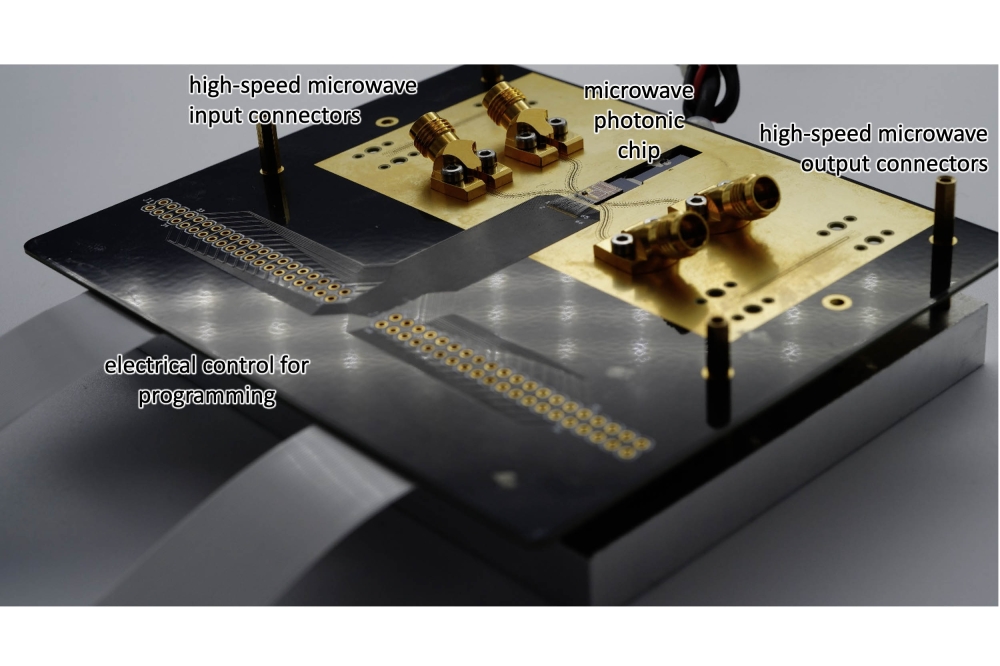
The convergence of RF and photonics will create hybrid systems that leverage the strengths of both technologies. We are already exploring photonic-based signal processing to enhance our mmWave solutions, potentially overcoming some of the fundamental limitations of purely electronic systems.
AI-driven adaptive beamforming will become increasingly sophisticated, enabling systems that can autonomously optimize performance in complex and contested environments. This capability will be particularly valuable in electronic warfare applications where the ability to rapidly adapt to changing conditions can mean the difference between mission success and failure.
As defense and commercial requirements continue to converge, we’ll see accelerated technology transfer between sectors, creating a positive feedback loop that benefits the entire ecosystem. Long gone are the days when defense technology led commercial innovation.
Today, the most successful defense systems often leverage commercial semiconductor advancements, while adding the ruggedization and security features required for military deployment and use.
At Sivers Semiconductors, we’re committed to leading this transformation through continued investment in R&D, strategic partnerships across defense and commercial sectors, and a relentless focus on pushing the boundaries of what’s possible with mmWave technology.
The future of defense communications is being shaped today by innovations in mmWave RF and beamforming—and the semiconductor industry stands at the center of this revolution. As we continue to advance these technologies, we’re
not just improving military capabilities, we’re laying the groundwork for the next generation of secure, high-performance communications across all sectors.