SEMICON West reaches new heights in Phoenix

A comprehensive overview of the forthcoming SEMICON West 2025 event, held for the first time in Phoenix, Arizona. The show floor has grown from 1,100 exhibitors in 2024 to more than1,500 this year, and the packed conference programme boasts just under 600 presentations covering the sector’s current challenges and opportunities, including AI and quantum computing, cybersecurity, the skills shortage, sustainability, supply chain, heterogeneous integration, and more.
SILICON SEMICONDUCTOR INTERVIEW WITH Joe Stockunas, President, SEMI Americas

SIS: The obvious place to start is that we have a brand new venue for SEMICON West - Phoenix, Arizona. How much was the decision influenced by the fact that Arizona is a big semiconductor ecosystem and growing. Why Phoenix?
JS: I made the decision shortly after coming into this role in 2022, and things were really just getting started in Arizona, but it certainly turned out to be a very good decision as a result of Arizona being successful in attracting over $200 billion worth of investment. Now, an awful lot of that’s just with TSMC, but there’s plenty more. I’ve been to countless ribbon cuttings in the Phoenix area over the last few years and I’ve got three during SEMICON week. So, it really has worked out very well. The decision goes back to the fact that I feel very strongly about hosting SEMICONs where there’s a semiconductor community. I wanted to do something a little bit different.
I looked at where that community exists. We looked at San Jose, Portland, Austin and, of course, Phoenix. The Phoenix Convention Centre really was the one that was most attractive because it was large enough to handle our growth. That’s worked out very well. We sold out the show floor. We’ve never done this before. We sold out the show floor almost a year in advance. The show’s in October this year. By the end of last November, we were completely sold out on the show floor. We kept taking waitlist requests from companies. In March, we had 280 companies on the waitlist. I looked at this and said, we’ve got to do something, I don’t want to turn away 280 companies. The main show floor is similar to Moscone in San Francisco, one level below street level. Adjacent to where the keynote stage will be, that auditorium is where we will have additional exhibition space.
We’ve opened that up, and we sold that out now as well. Last year, we had just over 1,000 booths at Moscone. And as of yesterday, we were at 1,535 booths. We’ve got a 50% increase in exhibitors this year, and we’ve got a great exhibition.
And content at the show will be fabulous. We’ll actually have four days of content. The exhibition will only be open Tuesday, Wednesday, Thursday. But Monday afternoon, we’ve got our Market Symposium, and that is very attractive to many. We get a huge crowd for that. During this session, SEMI’s own analyst along with others that we collaborate with through the year will provide different perspectives on what to expect in the semiconductor market. Overall, right now, we have
567 speakers lined up in those four days across 63 different content sessions. Again, last year, I think we had about 450. We’re up nicely on the number of speakers.

SIS: I was going to ask if you could point out what you think might distinguish the new location from the traditional home in San Francisco. You’ve already partly answered it because clearly the show is going to be bigger. Is there anything else you think that’s going to distinguish it being in Phoenix as opposed to San Francisco?
JS: It’s really interesting just how many companies are involved in semiconductors in Phoenix. There’s a very large number of big companies like Intel and TSMC, certainly. But there’s an awful lot of infrastructure in the industry based there as well. A number of our equipment and materials suppliers have located their headquarters in the area and have been there for a long time.
Companies like ASM and EV Group and a company I used to work for. I ran the electronics materials business at Air Products. Now, that division was sold off to Merck KGaA, Darmstadt, Germany and goes by EMD Electronics in the US. And again, they’ve got their headquarters for US now in Phoenix as well. So, a really great opportunity.
And what I think will be different is, I’ll be honest, I’m a little jealous of my peers in Asia, the shows in Asia are just unbelievable. We had 180,000 people in China in March at SEMICON China in three days, and Japan broke 100,000 people. And the difference is in Korea, Samsung and SK hynix combined bus 17,000 employees to come to SEMICON Korea. And that’s the difference for us in Phoenix this year - we’ve got those operating companies, the fabs, the equipment suppliers, material suppliers, the rest of the infrastructure that makes up semiconductor.
People are going to come and kick the tires this year. It’ll be a great show. Again, being in Phoenix, I’m expecting that our crowd will increase. Last year, we had about 25,000 people, I think maybe 27,000. But this year, I’m very confident that we’ll be over 35,000 and probably closer to 40,000 people this year. Being in Phoenix, where that infrastructure is established and people go to work every day in semiconductors, will bring more people into the convention centre, and we’re really excited about that. It’ll have a real buzz. Since the CHIPS Act, our shows had a real buzz. The show floors are crowded. There’s a lot of folks there. This year, I think it’ll even be bigger and better with us being in Phoenix where so much is going on.

SIS: You referenced some of the shows in Asia. Do you still view SEMICON West as very much a global event, bringing people from around the world to come and discuss some of the industry challenges and obviously the momentum? I still think the $1 trillion mantra is somewhere out there, isn’t it? But do you think you’re going to get that global audience and this forum to discuss what’s needed?
JS: I think you asked me three questions there!
So, your first question, the global show. SEMICON West was the original show, the first SEMICON we ever had, and that was in 1970 and back in Silicon Valley. And SEMI is headquartered in the US. The view of West is it’s both the Americas show, so SEMICON for the Americas business, but it’s also the headquarters show as well. As a result, it has always been very well-attended. We don’t have the numbers that China has, but all the movers and shakers are at SEMICON West, and that will continue.
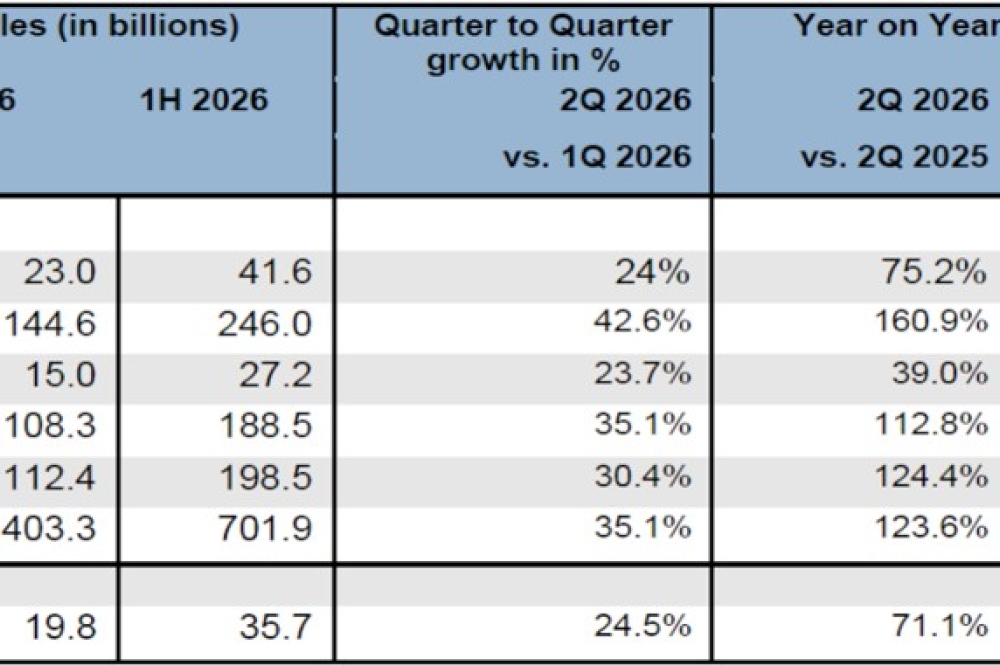
We do a really good job of tackling the issues that are facing our industry. That is very key to it. We are very much on the path to $1 trillion. To give you some feel for that, the semiconductor sales revenue, that’s $1 trillion in global semiconductor sales. Last year, we finished the year at $619 billion and we’re seeing very significant growth this year, maybe to $720 billion.
We had double-digit growth, high over 20% last year. And this year, most of the market analysts are projecting at least 15%. We’re well on track to $1 trillion. That was your second question. And that’s really exciting for us. It is a good time to be in semiconductors.
And your third question, I think it was, will we tackle the issues? And as I said, we very much tackle the issues at this event. We’ve got a great keynote schedule. We’ll have keynotes Tuesday, Wednesday, and Thursday morning.
Last year, we just did all day Tuesday and all day Wednesday. And what I did was I focused on the Americas issues on Tuesday, which was really the growth in America. It was really celebrating how much investment was happening in the US. Then on Wednesday, we took a look at the global opportunities and issues and split it up that way. My only regret was, if you go later in the day like we did, you’re competing with the show floor. I had wonderful speakers in the afternoon, and my only complaint was they deserved a bigger audience.
This year, I’m limiting it. The show floor doesn’t open until 10:00 a.m., and we’ll be finished with the keynotes on Tuesday and Thursday at 10:30 a.m. And on Wednesday, we’re going a little bit longer till 11:30 a.m. And the reason is on Wednesday, it will be AI day. We will start off with NVIDIA, and we will have all presentations focusing on how AI impacts and creates opportunity for the semiconductor industry. We’ve got great presentations on AI.
We’ll go a little bit longer. But for the most part, I don’t want to see us competing with the show floor. Again, we will be tackling all the opportunities and issues, which today, great growth opportunities, driven principally by AI, but then the other markets that we’re very excited about, automotive, manufacturing, industry 4.0, 5.0, as you see it, MedTech, the continued demand for communications and computing capability, and the advancement into quantum computing in the future. All those opportunities will be covered in great detail, both with the keynote presentations and the other 62 sessions that provide the over 560 speakers I mentioned earlier.
We’ll also have a lot to talk about on talent. Our industry is very much self-governing right now in wanting to make these investments and do them the right way and be environmentally sensitive with it. Growing issues with cybersecurity. Cybersecurity has really been the new issue that we’re putting more effort into. So, it is very much the headquarters show, and we will cover all the opportunities and issues that are present for the industry today and for the next five years as we move forward on that path to $1 trillion.
SIS: That’s answered a couple of my next questions. You’re ahead of me there. I know that the main theme is, ‘Stronger together’, which is, I guess, looking at the cross-industry collaboration. I’m just interested how far you think that can go because I’ve talked to a couple of people, you referenced AI, and clearly a large part of that is the data. I know traditionally, semiconductor companies are reluctant to share data for obvious reasons. But if the full potential of AI is going to be realised, they maybe will have to do something around that. Just your thoughts, I suppose, as to how far collaboration needs to go in the industry?
JS: I think we’ve really seen changes in collaboration. The SEMI supply chain initiative is very much led and engaged by us, but we’ve had Intel and TSMC partnering with us from day one in establishing that supply chain initiative. I’ve worked in the industry for 40 years and it was very difficult to get data, very difficult to get forecasts, even more difficult to get accurate forecasts. Then we have chip shortages, and that’s recognised now. I do think there’s a whole lot more collaboration in general.
I can point to that, but I’ll also point to when you talk about the technology demands now, it’s a number of entities working together. It’s certainly the tradition of the device manufacturers, the equipment manufacturers, and the material suppliers, and others. Now, again, design companies are coming into it as well in that, to make the most advanced chips, no one’s doing it alone today. And that collaboration is recognised. A number of the large companies are speaking openly about this, I’ve actually heard one of them talk about the fact that ‘we recognise we have to collaborate with our competitors now’.
I worked in the chemical/semiconductor industry for many years. And in the chemical industry, it’s a common practise. In some cases, we have a relationship where we’re competitors, in others, we’re suppliers, in others, we’re buying from each other. I think that’s coming to fruition now in the semiconductor industry as well, principally driven by the needs for a reliable and resilient supply chain, and then also the demands of the technology going forward.
SIS: In terms of a quick overview of what’s going on, you’ve mentioned the CEO Summit, but I think there are executive panels, workforce development. I think the SEMI University is there, and there are lots
of technology sessions, and then there’s the show floor. I’ve probably asked you about three questions in one, but can you give us a flavour of content, both in terms of the speakers, the conferences, and then what people can see on the show floor?
JS: As I mentioned a little bit earlier, the CEO Summit will be Tuesday, Wednesday, and Thursday. I’ve got anchor presentations on Tuesday. We’ll start off with the Governor of Arizona, and we’ll end up with TSMC. And in between, there’s another three or four presentations that are equally powerful. On Wednesday, it’s AI, and we start off with an NVIDIA presentation.
I’m hoping they bring the dog! It’s a programme around AI and robotics and tied to semiconductor opportunities for AI, but I’m really hoping they bring the dog - I hope at least some videos! And then the last session will be very interesting. Our friends from Merck KGaA, Darmstadt, Germany are actually bringing the global people officer and head of strategy in the US, and they’re going to do a presentation on how they see AI impacting their workforce, how they’ll gain advantages, where their concerns lie. And then on Thursday morning, we’ve invited Department of Commerce to speak. We’ve invited Intel to speak about their foundry business and where that’s going.
And then we finish up with a presentation on cybersecurity. And that presentation will be by Keith Krach. Keith was the CEO of DocuSign, so very well-versed in security. And he also served in a previous administration in the Department of State, so very much a global view as well. And again, one of our biggest challenges now is protecting our data in this big data AI world that we’re all in.
I walked away from SEMICON West last year and looked at what were my big takeaways? The number one on my list was my last position in industry, I worked in back-end packaging and test equipment. I had seven different product lines for test and high-speed dispense for packaging applications. For the last 10 years, I’ve been working on advanced packaging, and advanced packaging was the future. I walked away from the show last year, and my view was that the future is now for advanced packaging. We will have an awful lot more content, and that’s very prevalent today, as you see all the things that are being discussed on the packaging that’s used for the most advanced chips, the stacking, the memory. You will see a whole lot more content in our agenda that focuses on advanced packaging, heterogeneous integration.
In terms of workforce development, we’re really proud at SEMI to have been selected to operate the National Network for Microelectronics Education, and we’ll look to shepherd the implementation of a national programme. You’ll see and hear a whole lot of what’s going on in workforce development with SEMI in the US and globally, during the presentations and also on the show floor where we’ll have a workforce development pavilion.
Over the last few years, there’s been a real buzz in the show. We’ve had wonderful attendance, we’ve had a large number of speakers, great content and great exhibit show floor.
This year, the thing I’m trying to bring to it is a bit more recognition and celebration. On Monday evening, we will have our first ever gala. It’s called the Legends and Leaders Honors event, where we will recognise Lisa Su, the CEO of AMD, as our first award recipient for the SEMI Silicon Medal. First time we’ve ever done that so it will be a big time celebration on Monday evening. On Tuesday evening, we will have a street fair. We’ve got a country western band, and we’ve got a bunch of new activities on Third Street, which separates the two buildings in the Convention Centre, and we’re going to have fun on Tuesday night.
We’re not going to compete with many of our large customers at SEMI who host hospitality from 5:30 p.m. to 8:00 p.m. So, from 8:30 p.m. till about 11: 00 p.m., we’re going to have this street fair, and it’ll be fun folks.
Additionally, during the CEO Summit, each day we’ll have at least two presentations recognising technology advancement. We have a 20 Under 30 recognition where we recognise 20 people under 30 years of age. We’ll present the SEMI Catalyst Award to one of the global companies that’s been in Phoenix for a long time and still today is providing enabling technology for the advancement of our industry. We’ll have a host of different presentations where we’re recognising people on stage as well.
SIS: In closing, I guess it’d be good to understand if there was one thing you wanted people to take away, that might be difficult, so it might be two or three things, but what you want them to go away with, and then, in my tradition of asking you at least two questions in one, for people who are attending for the first time, would you have any advice? You’ve given us the numbers. They can’t, I expect, get round all 1,500 stands or listen to all of the presentations. Any tips as to how best to get stuck into SEMICON West?
JS: First thing is, visit our website, www.semiconwest.org. You need to visit our website, first of all to register for the event. Our agenda is organised in many different ways. You can see the full agenda and decide what presentations you must hear. The show floor map is there. You can search on specifically what exhibitors you might want to see when you go to visit. You can see where the social happenings are occurring all on that same website.
Overall, what I’d like to leave everyone with is we’re clearly on the path to $1 trillion, but it’s not going to come to you. It’s a very competitive world right now. If you want a part of that $1 trillion, come to SEMICON West, have a plan. There’s tremendous opportunities for you to network, develop business contacts, figure out where you can most advance your opportunities in the semiconductor world. It’s a very exciting world right now. It’s happening all over the... well, not quite all over the world, but we’ve got eight SEMICONs and pretty much wherever there’s a SEMICON, there’s a lot of activity right now in the semiconductor world. Come to SEMICON, make the contacts, do the networking, and come ready with a plan so you can maximise your opportunities in three days.
www.semiconwest.org