Cloudberry VC launches Europe’s first semiconductor venture fund
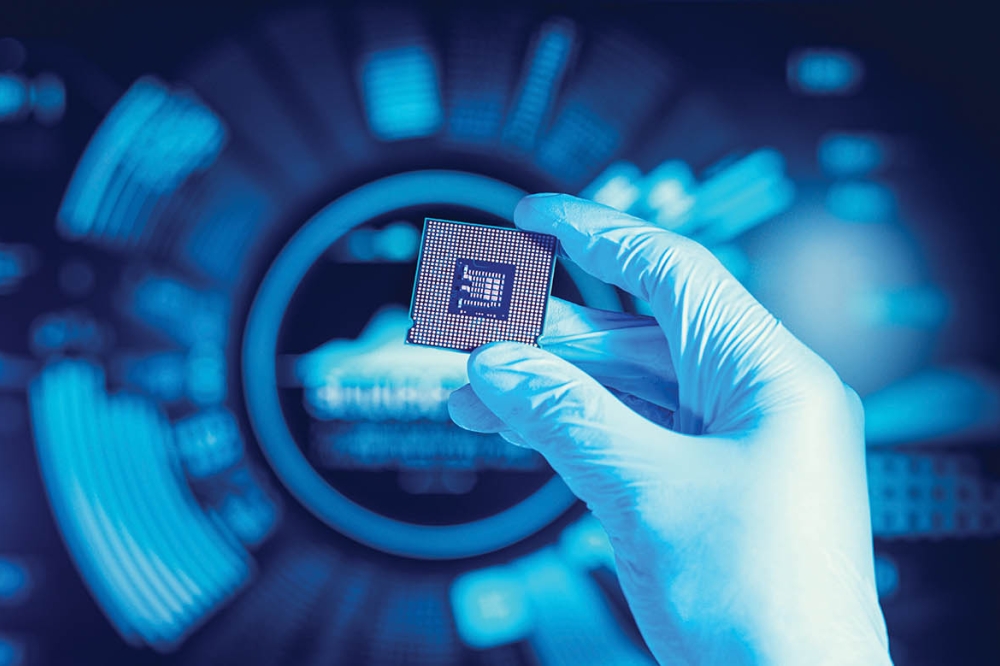
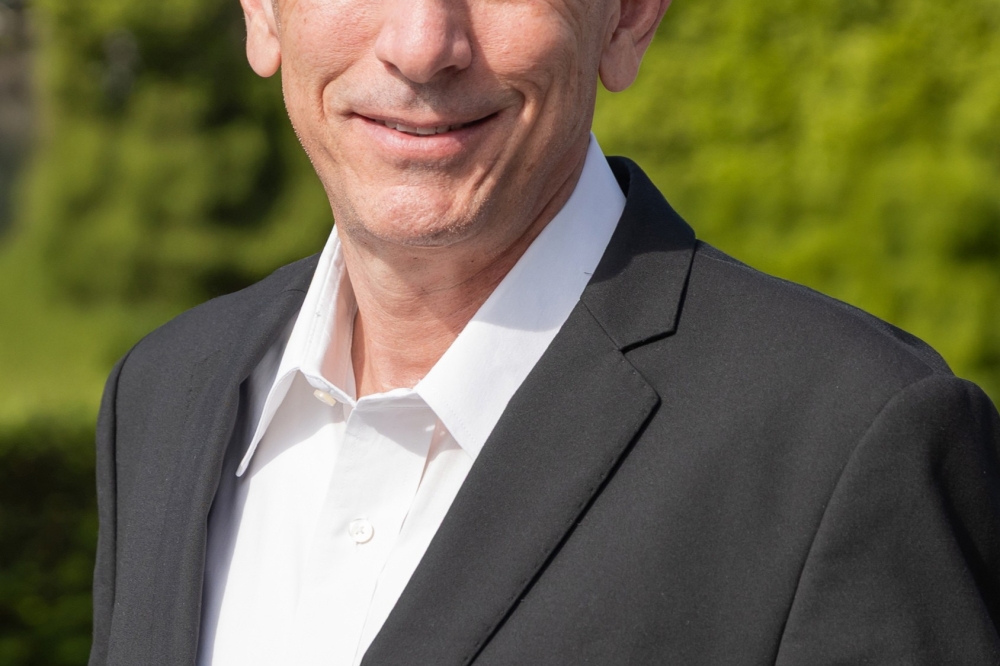
Rene Kromhof, Founding Partner, Cloudberry VC, a venture capital firm based in Helsinki and London, explains the background to the company’s launch of Europe’s first semiconductor venture fund with an initial close of €30 million. The fund invests in companies advancing the technological frontier with semiconductors, photonics and advanced materials to advance compute, connectivity, sensing and power.
Europe has no shortage of world-class semiconductor research. From photonics laboratories in Finland to compound semiconductor clusters in Germany and the UK, the continent consistently produces breakthrough technologies at the frontier of compute, connectivity, sensing, and power.
Yet for decades, a familiar problem has persisted: too many of these innovations fail to make the leap from laboratory success to scalable commercial impact.
Cloudberry VC believes the missing ingredient is not talent or ideas, but specialist capital.
Founded by semiconductor veterans and headquartered in Helsinki and London, Cloudberry VC has launched Europe’s first dedicated semiconductor venture capital fund, closing an initial €30 million round and setting out an ambitious goal: to become the go-to early-stage investment platform for semiconductor, photonics, and advanced materials startups across Europe.
At the heart of the fund is a simple but powerful thesis. Semiconductors are too important, too complex, and too capital-intensive to be treated as just another category of “deep tech.” They require investors who understand how chips are actually built, manufactured, qualified, and scaled — and who can actively help founders navigate that journey.
“We talk a lot about deep tech these days,” says Rene Kromhof, Founding Partner at Cloudberry VC. “But it’s still a very broad, general term. What’s often missing is the very specific know-how needed to build and scale semiconductor companies.”
From the Fab floor to venture capital
Kromhof’s conviction is rooted in personal experience. Over the course of his career, he has worked both inside major semiconductor corporates — including ASML — and within startups, as an operator and investor. That dual perspective exposed a recurring gap in Europe’s innovation ecosystem.
On one side sit technically brilliant founders, often PhDs with years of highly specialised research behind them. On the other side are investors enthusiastic about “hard tech” but lacking hands-on experience with semiconductor engineering, manufacturing constraints, equipment procurement, or intellectual property strategy.
“The challenge isn’t that investors need to know what a nanometre is,” Kromhof explains. “It’s about understanding how engineering decisions affect manufacturability, how IP strategies are built, how you design something that can actually be produced at scale. Especially in hardware, those choices matter early.”
Cloudberry VC was created to bridge that gap — not just by providing capital, but by embedding semiconductor expertise directly into the investment process. The firm’s partners and advisors all come from within the industry, allowing them to support founders on issues that generalist investors often struggle to assess.
A strong signal from global capital
Cloudberry VC’s €30 million initial close is notable not only because it reached its original target size, but also because of where the capital came from. Approximately 85% of the fund’s capital (excluding Finland’s state-owned investor Tesi) was raised internationally.
For Kromhof, this is a clear signal that the opportunity extends far beyond any single national ecosystem.
“It shows that semiconductors, photonics, and advanced materials resonate globally,” he says. “We have strategic corporate investors, but also institutional investors, angels, and high-net-worth individuals who were actively looking for a fund like this — and simply couldn’t find one in Europe before.”
Those strategic investors include major industry players such as GlobalFoundries and Radiant Opto-Electronics, whose involvement goes far beyond financial backing. Their presence reinforces Cloudberry VC’s position as a sector-specific fund and opens doors that are typically closed to early-stage startups.
“If you’re a generalist fund, you might do a semiconductor deal one day and a fintech deal the next,” Kromhof notes. “That’s not particularly attractive for semiconductor corporates. Our focus aligns directly with their strategic interests.”
Why specialisation matters in semiconductors
The case for a dedicated semiconductor fund is compelling when viewed through a market lens. Semiconductors are already among the most valuable industries in the world, and their importance continues to grow.
Today, the world’s most valuable company, NVIDIA, is a semiconductor company. Europe’s most valuable technology company, ASML, sits squarely at the heart of the global chip supply chain. By the end of the decade, combined semiconductor and photonics markets are expected to exceed $2 trillion in annual revenues — before accounting for the immense value captured by companies further up the stack.
But scale alone is not the whole story. Semiconductors are also uniquely strategic. They underpin everything from artificial intelligence and data centres to electric vehicles, telecommunications, medical devices, and space systems.
That strategic importance, Kromhof argues, makes focus essential.
“When you specialise, you attract the right investors, the right founders, and the right partners,” he says. “You create a knowledgeable supply chain of capital, all the way from early-stage startups to strategic LPs.”
For founders, that translates into smarter support. Semiconductor startups may have deep technical expertise, but they still face daunting challenges around scaling, qualification, and production readiness. Cloudberry VC aims to complement founders’ knowledge with its own operational experience — and with direct access to industry-scale infrastructure.
Closing Europe’s early-stage funding gap
Despite Europe’s strengths in semiconductor research, early-stage ventures in the sector remain chronically underfunded compared to their US and Asian counterparts. Kromhof believes much of this stems from outdated perceptions.
“There’s a stigma that these technologies are too hard, too expensive, and take too long,” he says. “That scares investors away. But the data actually tells a very different story.”
Semiconductor startups may require patience, but they often build strong IP positions early — creating defensible value long before mass-market revenues arrive. In many cases, strategic acquisitions rather than IPOs provide attractive exit paths.
Cloudberry VC’s role, Kromhof says, is partly catalytic. As a first mover, the firm hopes to demonstrate that specialist semiconductor investing is both viable and attractive — encouraging others to follow.
“We’re realistic,” he adds. “With €30 million, we’re not going to change a trillion-euro industry overnight. But if we can de-risk decisions for generalist investors, attract co-investment, and bring more capital into the space, the impact multiplies.”
Beyond the Chips Act: The Role of venture capital
Europe’s ambition to strengthen its semiconductor position has been formalised through the EU Chips Act, which aims to double Europe’s global market share to around 20% by 2030. Much of the attention, and funding, has focused on large-scale fabs and manufacturing infrastructure.
While Kromhof welcomes these investments, he believes early-stage venture capital plays an equally critical — and often overlooked — role.
“The Chips Act has put a lot of capital into big infrastructure projects,” he says. “But innovation doesn’t start in fabs. It starts in startups.”
Rather than attempting to replicate the full end-to-end supply chains of Asia or the US, Kromhof argues that Europe should double down on specific niches where it already has strengths — and where interdependence within the global supply chain creates leverage.
Compound semiconductors for power electronics, photonic integrated circuits for AI infrastructure, and specialised chips for automotive and space applications are just a few examples. Europe has deep expertise in all of these areas, but needs more early-stage capital to turn that expertise into scalable businesses.
“We’ve done this before,” Kromhof points out. “ASML is a perfect example. Atomic layer deposition was invented in Finland. The legacy is there. What’s missing is enough early capital to get the next generation of innovations off the ground.”
Leveraging strategic LPs for real-world scale
One of Cloudberry VC’s most distinctive advantages lies in its strategic limited partners. Relationships with GlobalFoundries and Radiant Opto-Electronics allow portfolio companies to engage with mass-production environments far earlier than would otherwise be possible.
This is critical, Kromhof explains, because many startups develop processes that work in a lab — but break down when scaled to industrial volumes.
“Design for manufacturability is everything in this industry,” he says. “If you wait too long to think about it, you risk expensive redesigns later.”
Through access to multi-project wafer runs and industrial-scale testing, Cloudberry VC-backed startups can validate designs in real silicon early on. The benefits extend beyond chip designers to equipment, materials, and metrology startups, which can tap into thousands of experienced engineers for feedback and iteration.
“That level of access is extremely rare at the pre-seed and seed stage,” Kromhof says. “For us, it’s a real unfair advantage.”
What Cloudberry VC looks for in founders and technologies
Cloudberry VC typically invests between €300,000 and €1 million at the pre-seed and seed stages, with an average first cheque of around €500,000. Unusually, the fund reserves approximately 70% of its capital for follow-on investments, reflecting the long development cycles common in semiconductor ventures. When evaluating opportunities, team quality is essential — but IP is paramount.
“Early-stage value in this sector is largely about intellectual property,” Kromhof explains. “Patents, know-how, freedom to operate — that’s the moat.”
While Cloudberry VC does not restrict itself to specific verticals, several technology themes stand out. Edge AI, power-efficient computing, photonic interconnects, advanced cooling, and compound semiconductors all feature prominently. Connectivity — particularly in the context of 6G — is another area where Europe’s historical strengths could translate into future leadership.
At the same time, Kromhof is keen to stress that Cloudberry VC is a horizontal enabler rather than a thematic AI fund. “We enable verticals,” he says.
“Medtech, space, automotive, industrial — all of them depend on semiconductors and photonics. That’s where we play.”
Finland, the Nordics, and a Pan-European vision
Although Cloudberry VC is rooted in Finland and the Nordics, its mandate is explicitly European. The firm already attracts deal flow from across the continent, driven by its specialist reputation.
“Semiconductors may be a huge market, but the community is surprisingly small,” Kromhof observes. “People know who does what.”
Finland offers particular advantages, including a high density of technical universities, strong research institutions such as VTT, and significant involvement in EU Chips Act pilot lines. In fact, Finland is set to host more of these mass-production representative lines than almost any other European country.
Cloudberry VC complements this local strength with a distributed team, including partners in the UK and venture partners in Germany and Switzerland, ensuring proximity to founders across Europe. Building a Platform, Not Just a Fund
Looking ahead, Kromhof is clear that Cloudberry VC’s ambitions extend beyond a single fund.
“In the short term, our focus is on delivering strong returns,” he says. “That’s non-negotiable.”
But longer term, the vision is to build Europe’s leading semiconductor investment platform — combining capital, strategic partnerships, and hands-on operational support.
Already, Cloudberry VC works with IP specialists, chip design partners, and organisations that help startups access EU funding mechanisms. Over time, Kromhof hopes to scale this network alongside larger funds and deeper strategic involvement from European industry.
Ultimately, the goal is not complete self-sufficiency — which Kromhof sees as unrealistic — but smarter interdependence.
“The semiconductor supply chain is the most globalised supply chain in the world,” he says. “No region can do everything alone. Europe needs to focus on niches, become excellent at them, and invest early enough to make a difference.”
If Cloudberry VC succeeds, Europe’s next semiconductor success stories may not come from mega-fabs alone, but from the startups quietly laying the foundations today — backed by capital that truly understands the chips they are building.