Metallic Oxide Semiconductor Field Effect Transistor market to surpass $15.5 billion by 2033
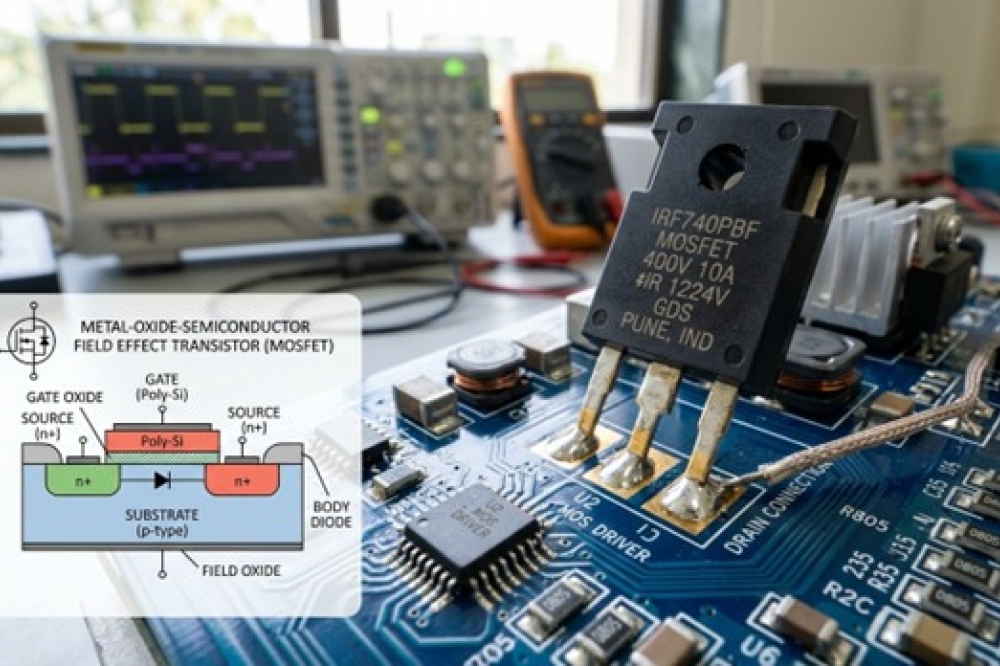
By 2033, the MOSFET market is projected to attain a value of USD 15.5 billion, propelled by increasing demand for energy-efficient electronic devices and expanding applications across automotive, industrial, and consumer electronics sectors. The market’s expansion is underpinned by technological advancements in power electronics and the proliferation of smart, connected devices worldwide.
The Metallic Oxide Semiconductor Field Effect Transistor (MOSFET) market represents a critical segment of the global semiconductor industry, underpinning modern electronics and power systems. MOSFETs are essential components used for switching and amplification in electronic circuits, enabling efficient power management and signal processing across countless applications.
Key Market Drivers
Rising Demand for Consumer Electronics
The proliferation of smartphones, tablets, laptops, and wearable devices has significantly increased the demand for MOSFETs. These components enable efficient power management, longer battery life, and compact device design. As consumer expectations shift toward high-performance and energy-efficient devices, manufacturers are incorporating advanced MOSFET technologies into their products.
Growth of Electric Vehicles (EVs)
One of the most significant drivers of the MOSFET market is the rapid growth of electric vehicles. MOSFETs are widely used in EV powertrains, battery management systems, and charging infrastructure. Their ability to handle high switching frequencies and reduce power losses makes them ideal for automotive applications. The transition from traditional internal combustion engines to electric mobility is expected to further accelerate demand.
Expansion of Renewable Energy Systems
The global push toward clean energy has led to increased deployment of solar and wind power systems. MOSFETs are crucial in power conversion processes such as inverters and energy storage systems. They help improve efficiency and reduce energy losses, making them indispensable in renewable energy applications.
Industrial Automation and IoT
The rise of Industry 4.0 and the Internet of Things (IoT) has created new opportunities for MOSFET applications. Industrial automation systems rely on efficient power management and high-speed switching, both of which are enabled by MOSFET technology. Additionally, IoT devices require compact, low-power components, further driving market growth.
Technological Advancements
Emergence of Wide Bandgap Materials
One of the most transformative trends in the MOSFET market is the adoption of wide bandgap materials such as silicon carbide (SiC) and gallium nitride (GaN). These materials offer superior performance compared to traditional silicon-based MOSFETs, including higher efficiency, faster switching speeds, and better thermal management.
SiC and GaN MOSFETs are increasingly being used in high-power applications such as EVs, renewable energy systems, and data centers. Their ability to operate at higher voltages and temperatures makes them ideal for next-generation power electronics.
Miniaturization and Integration
As electronic devices become smaller and more powerful, there is a growing need for miniaturized components. Advances in semiconductor fabrication technologies have enabled the production of smaller, more efficient MOSFETs with improved performance characteristics. Integration of MOSFETs into complex circuits and systems is also becoming more common, enhancing functionality and reducing overall system size.
Improved Thermal and Switching Performance
Modern MOSFET designs focus on reducing on-resistance and improving thermal performance. These enhancements lead to lower power losses and higher efficiency, which are critical for applications such as data centers and industrial systems. Continuous innovation in packaging and materials is further improving device reliability and performance.
Market Challenges
High Initial Costs
Advanced MOSFET technologies, particularly those based on SiC and GaN, involve higher production costs compared to traditional silicon-based devices. This can limit adoption in cost-sensitive applications.
Supply Chain Disruptions
The semiconductor industry has faced significant supply chain challenges in recent years, affecting the availability of raw materials and components. These disruptions can impact production and lead to increased costs.
Thermal Management Issues
Despite advancements, managing heat in high-power applications remains a challenge. Efficient thermal management solutions are essential to ensure device reliability and longevity.
Future Outlook
The future of the MOSFET market looks promising, with continued growth expected across various sectors. The increasing adoption of electric vehicles, renewable energy systems, and advanced electronics will drive demand for high-performance MOSFETs.
The shift toward wide bandgap materials such as SiC and GaN is expected to revolutionize the market, enabling new applications and improving overall efficiency. Additionally, advancements in semiconductor manufacturing and design will continue to enhance device performance and reduce costs.
By 2035, the MOSFET market is anticipated to witness significant expansion, driven by technological innovation and the global transition toward energy-efficient solutions.
Competitive Landscape
Prominent companies operating in the market are:
• Texas Instruments Inc.
• Infineon Technologies AG
• ON Semiconductor Corporation
• STMicroelectronics N.V.
• Toshiba Corporation
• NXP Semiconductors N.V.
• Vishay Intertechnology Inc.
• Renesas Electronics Corporation
• ROHM Semiconductor
• Fuji Electric Co. Ltd.
• Mitsubishi Electric Corporation
• Diodes Incorporated
• Alpha & Omega Semiconductor Limited
Source: https://growthmarketreports.com/report/metallic-oxide-semiconductor-field-effect-transistor-market-global-industry-analysis