Keysight unveils Machine Learning Toolkit

Keysight Technologies has released the new Machine Learning Toolkit in the latest Keysight Device Modelling Software Suite. This new solution reduces model development and extraction time from weeks to hours, enabling faster Process Design Kit (PDK) delivery and Design Technology Co-Optimisation (DTCO) applications.
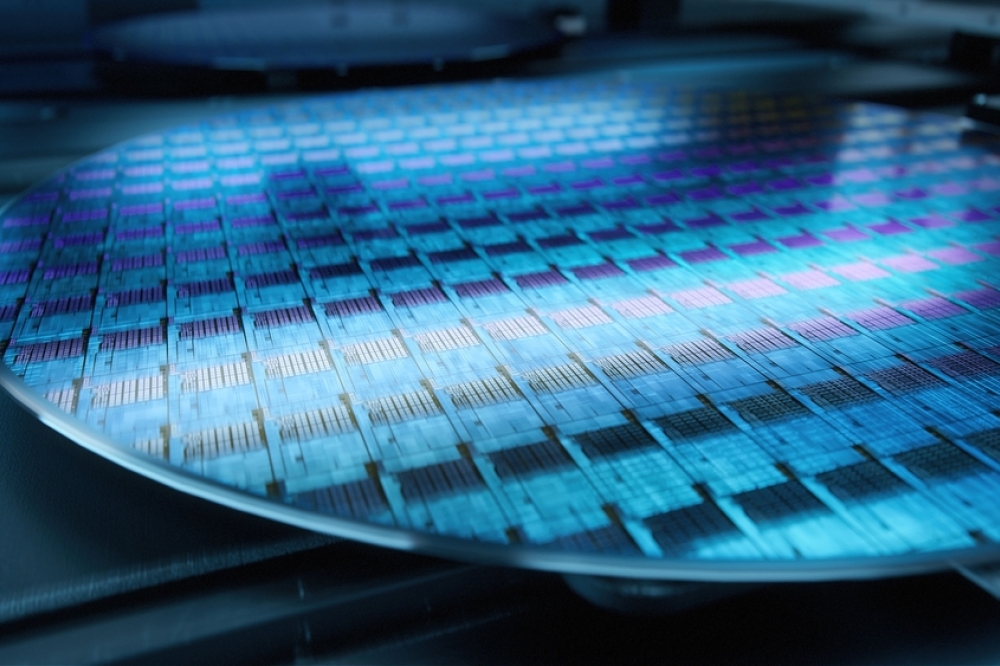
The semiconductor industry is undergoing rapid transformation, driven by advanced architectures such as gate-all-around (GAA) transistors, wide-bandgap materials such as GaN and SiC, and heterogeneous integration strategies including chiplets and 3D stacking. While these innovations drive performance, they also create complex modelling and parameter extraction challenges. Traditional workflows rely on physics-based compact models and manual parameter extraction, forcing engineers to adjust hundreds of interconnected parameters across multiple operating conditions, a process that can take weeks and often struggles to achieve optimal results. With increasingly tight schedules, faster, more predictive, and automated artificial intelligence/Machine Learning (AI/ML)-driven modelling solutions are now essential.
Keysight’s new Machine Learning Toolkit, featuring an ML optimiser, auto-extraction flows, and utilities within Device Modelling MBP 2026 tackles these challenges by introducing a framework that combines advanced neural network architectures with ML-based optimisation. Using this toolkit, auto-extraction can reduce the parameter extraction steps from over 200 to fewer than 10, accelerating PDK delivery, automating DTCO, and speeding up time-to-market.
Key Features and Benefits:
Accelerated Parameter Extraction: Reduces hundreds of manual steps to 5 to 6 automated steps, enabling global optimisation of 80+ parameters in a single run, capturing secondary effects, temperature variations, and dynamic behaviours. This solution eliminates repetitive manual tuning and improves predictive accuracy across DC, RF, and large-signal domains.
Automated Workflow: Integrates seamlessly with Keysight’s Device Modelling platform, supporting Python-based customisation and robust automated modelling flow.
Scalable Across Technologies: Workflows adapt easily to FinFET, GAA, GaN, SiC, and bipolar devices, ensuring repeatable and reusable flows for multiple process nodes.
Improved DTCO Efficiency: Enables faster feedback loops between device and circuit design, reducing PDK development cycles from weeks to days.
Nilesh Kamdar, General Manager of Keysight EDA, said: “AI/ML is fundamentally transforming the traditional workflows and methodologies of compact modelling. With the new Machine Learning Toolkit, we empower our customers to deliver more predictive, higher-quality models in significantly less time — accelerating PDK development and helping them keep pace with rapidly evolving semiconductor technologies.”
By leveraging AI/ML-driven modelling, Keysight enables semiconductor companies to accelerate innovation, reduce development risk, and maintain a competitive edge in a rapidly evolving market. For more details, visit Keysight Device Modelling Solutions.
Additional enhancements across other Keysight device modelling solutions include:
Device Modelling MQA 2026: Introduced new rules related to the Ageing Model QA for OMI and MOSRA.
Device Modelling WaferPro 2025: Introduced a new remote-control feature for remote low-frequency noise testing with A-LFNA for enhanced flexibility and efficiency.
A-LFNA 2026: Introduced new low-frequency noise stress test capability for seamless measurement from stress test to noise test.